
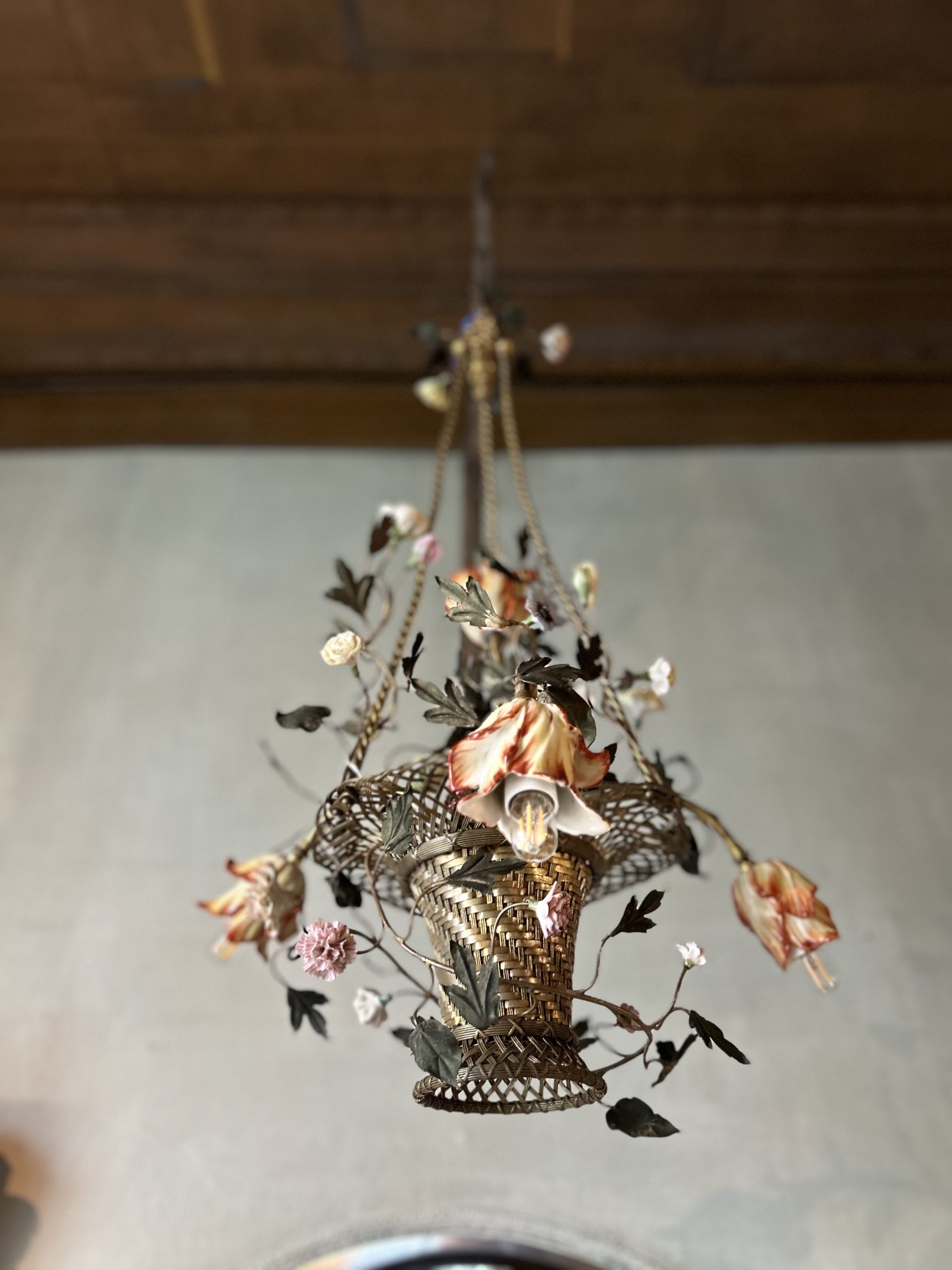
Small chandelier in the shape of a straw basket in gilded bronze with porcelain flowers.
Circa 1930
Italy

Rare and precious 18th-century piece is a mirror fixed under glass depicting the Virgin Mary.
France, 18th century
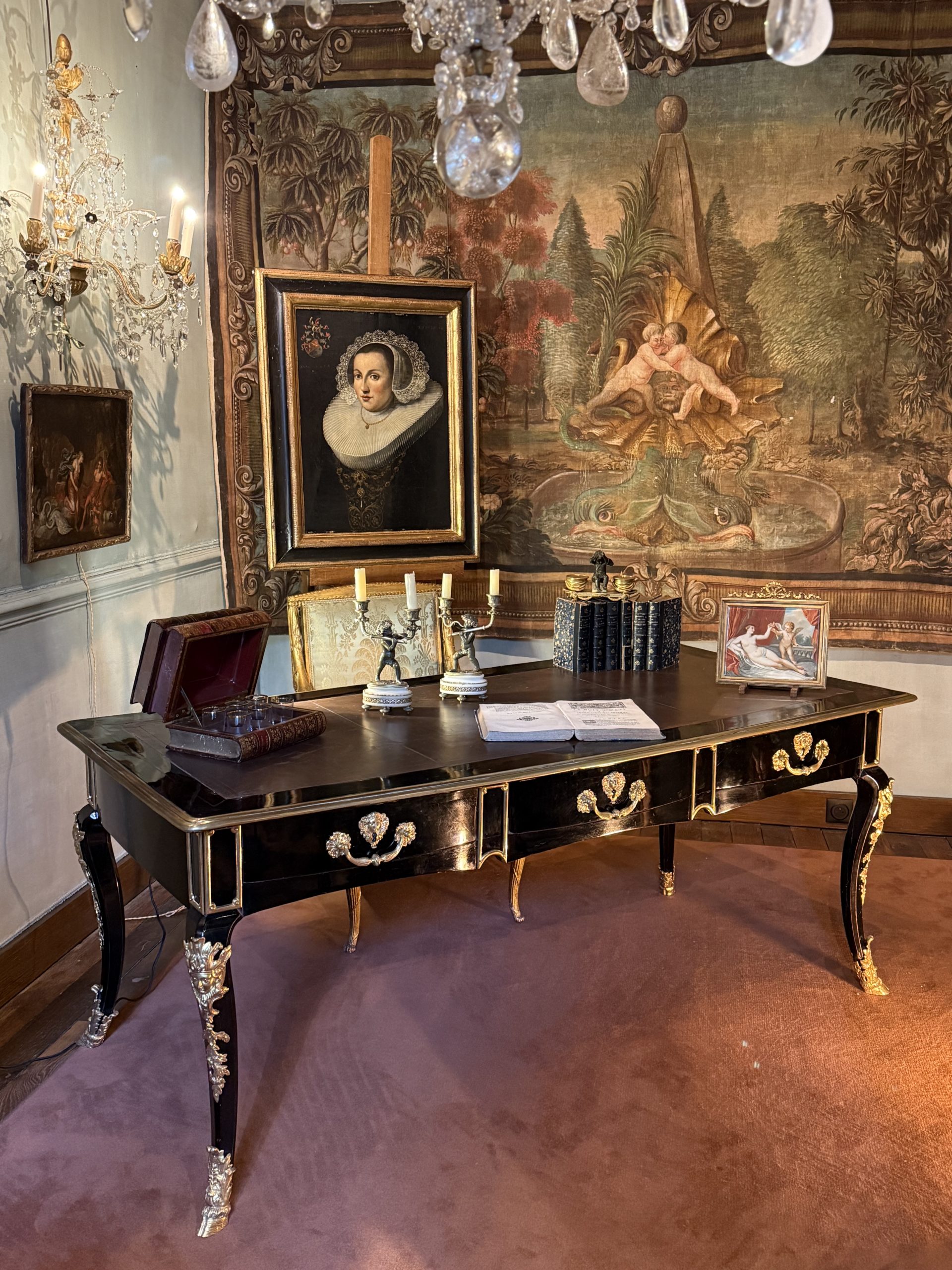
Large flat desk, all black lacquered sides opening with three drawers in a row. It rests on nicely curved legs enhanced with a decoration of bronzes with heads of figures and hooves, top covered in old brown leather surrounded by wood and an ingot mold.
Epoque Napoléon III
France
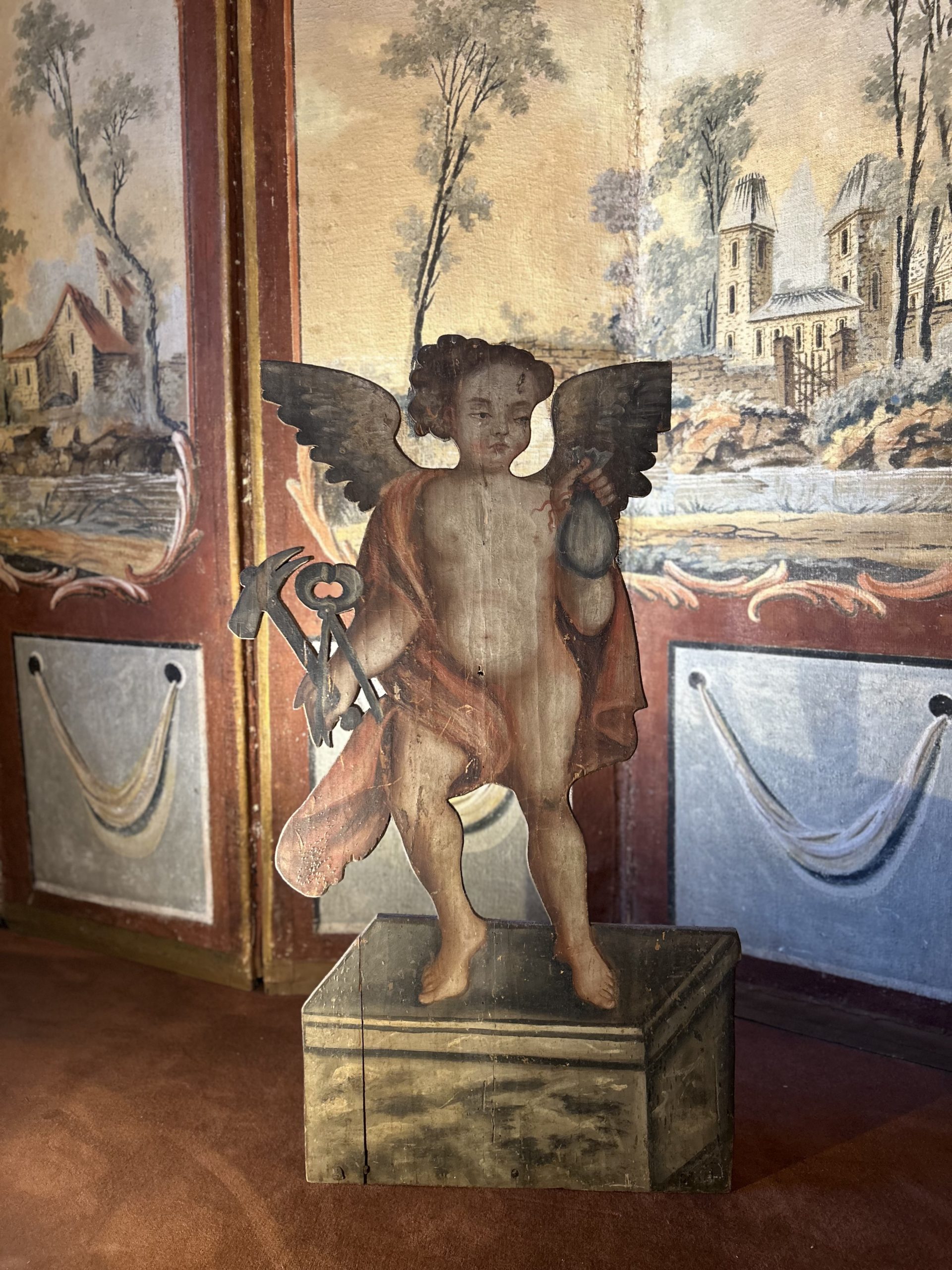
Set of four polychrome woodcut silhouettes representing angels carrying the instruments of the Passion.
Late 18th century
Italy
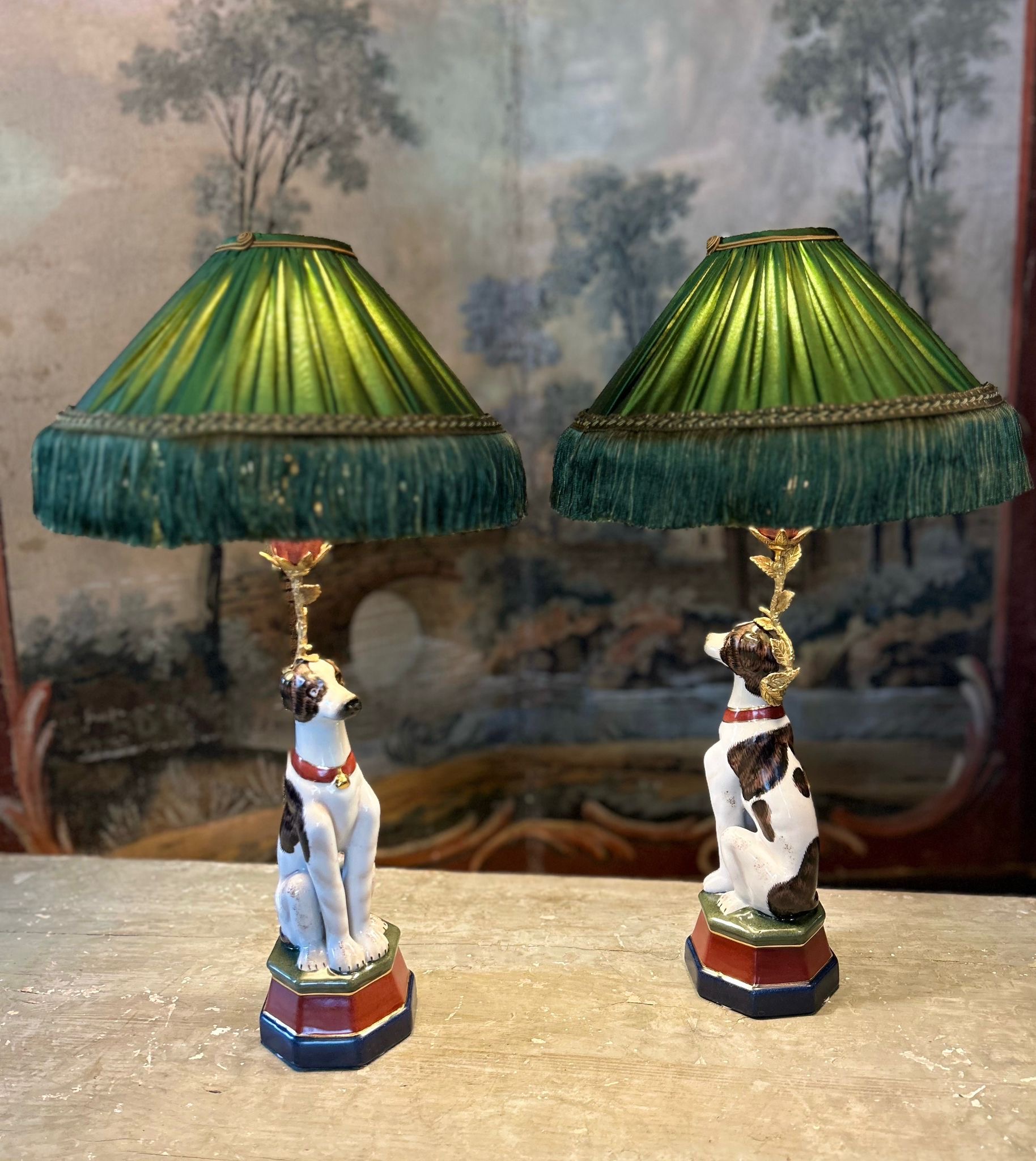
Pair of dog-shaped lamps in polychrome porcelain and gilded bronze with new green-lined silk shades and Houlès trimmings.
Early 20th century

Dating from the late 19th century, it is a reproduction of model no. 1326 from the Fourmaintraux factory in Desvres, with an 18th-century Moustiers decor after Joseph Fouque. Within the museum “In the Belle Époque of Desvres Earthenware,” there is an example of the rectangular model no. 1326.

Oil on canvas representing a mastiff and its puppies in an outbuilding, after the original by Christophe Huet (1700-1759) found in the private collection of Count Alarico Palmieri.
19th century
England
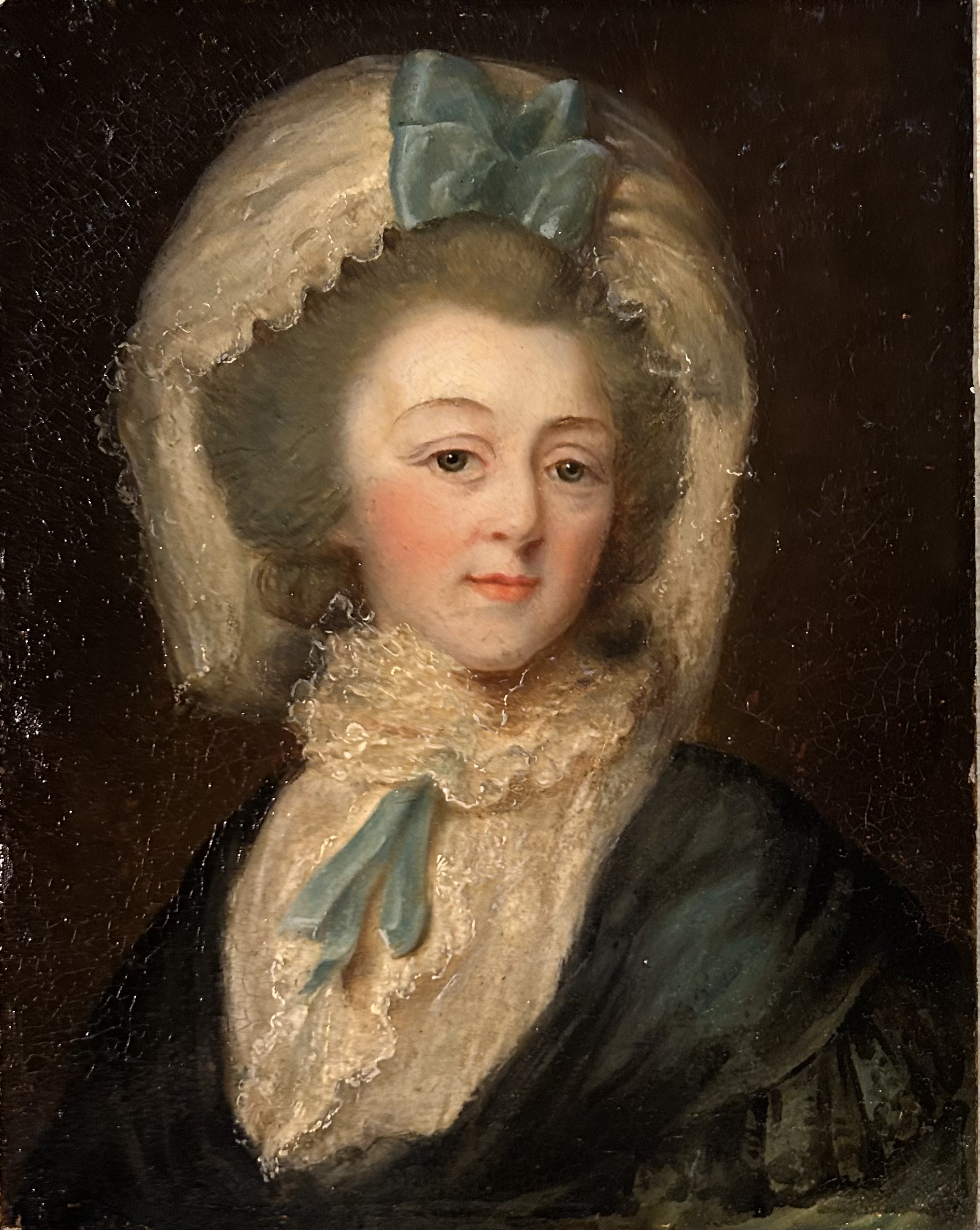
Oil painting on copper “Portrait of a woman with a blue bow”.
18th century
France
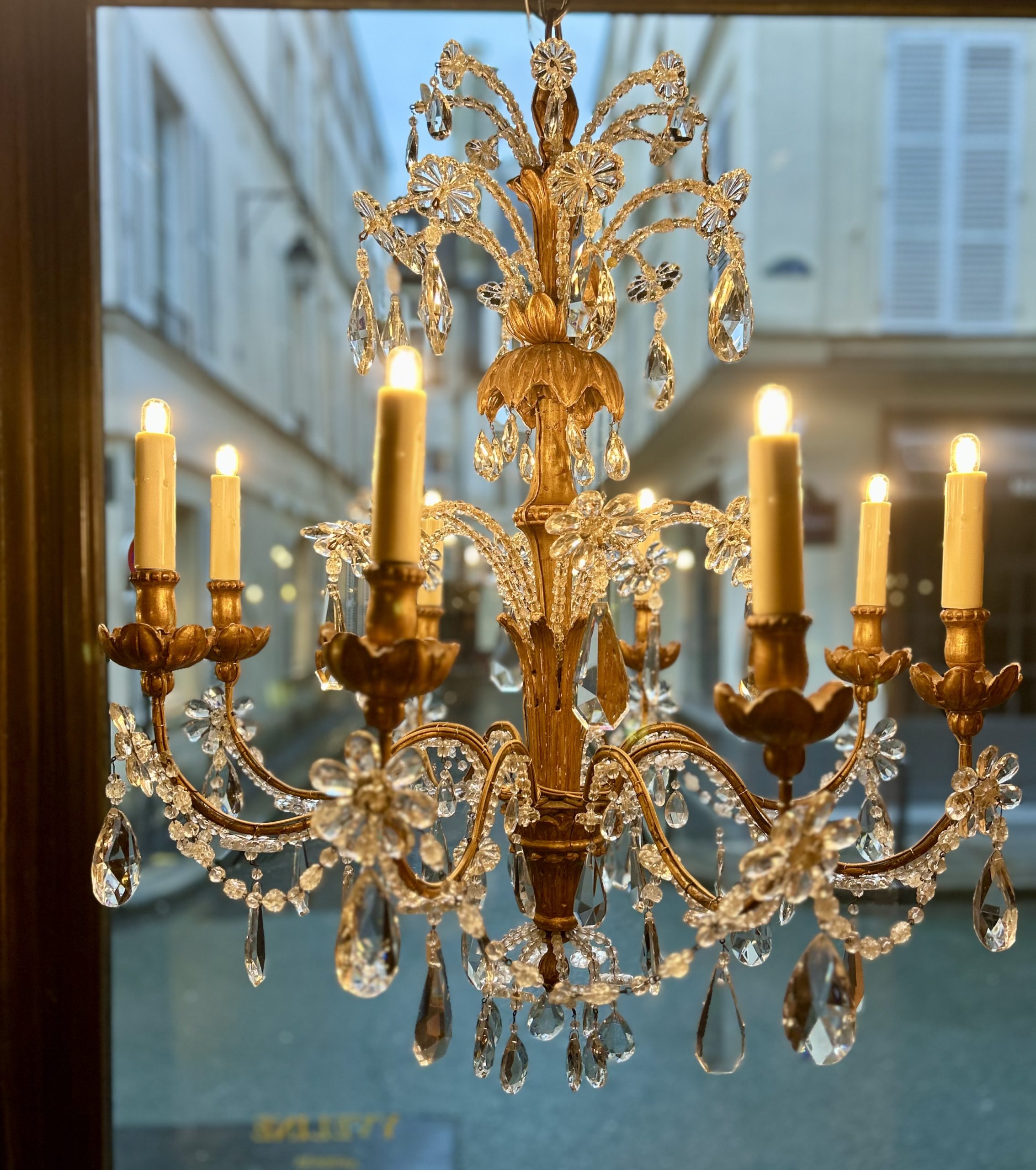
Chandelier with 6 arms of light, carved gilded wood shaft, cut glass papillae, blown glass beads.
Italy,
19th century
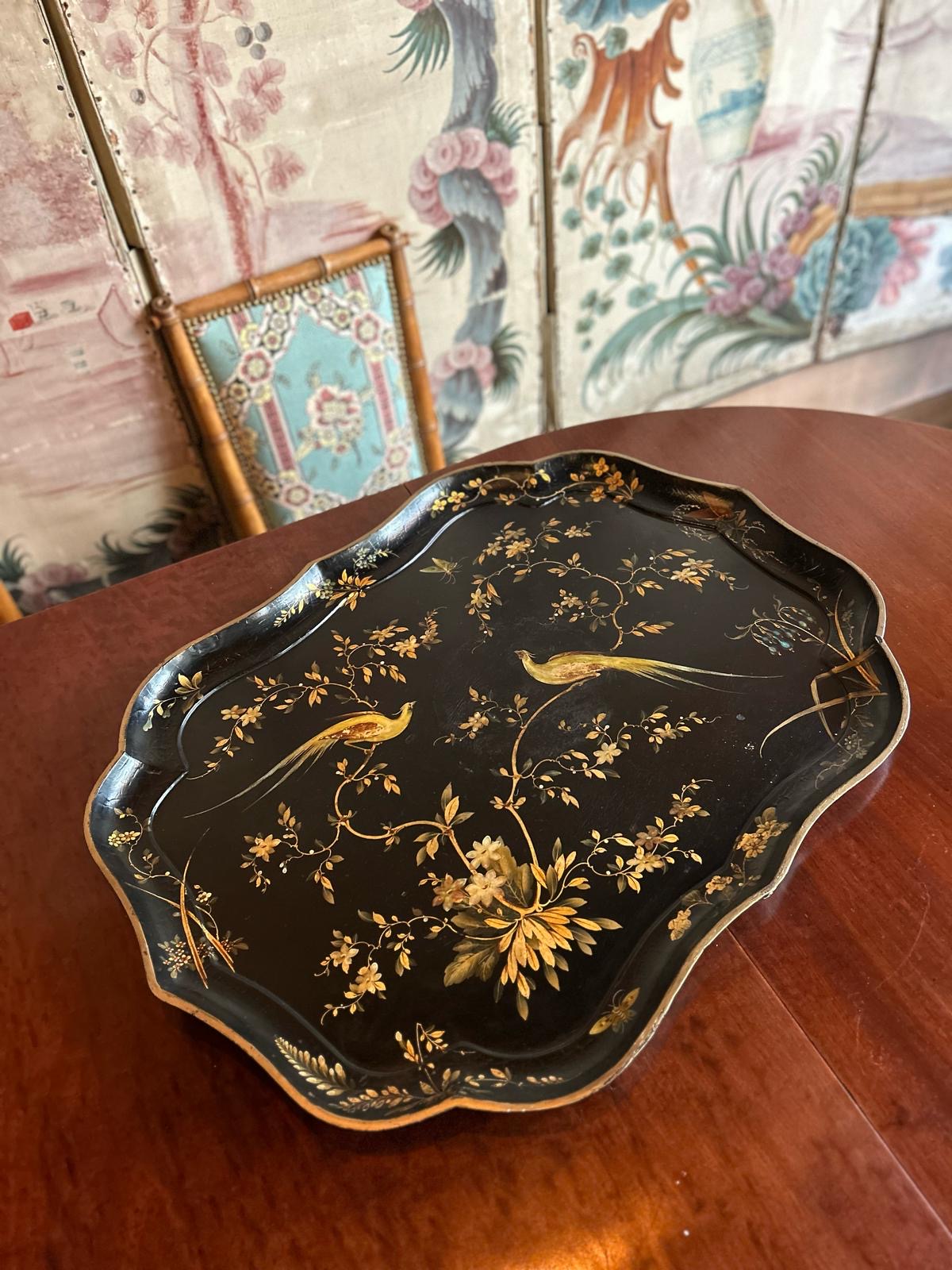
Large lacquered wooden tray decorated with a motif inspired by Chinoiserie.
Napoleon III period, 19th century
France