

Letter Holder
Vienna bronze letter holder depicting an Irish Setter resting on a base simulating a patch of green grass.
This desk accessory operates by means of a spring mechanism which, when pressure is applied to the dog’s neck, opens its mouth, allowing papers, letters, business cards, and other small documents to be inserted.

Pair of Chinese porcelain cats, depicted seated, with white coats marked by black spots. Both figures display a compact, naturalistic form, characteristic of animal representations in Chinese decorative arts. The treatment of the bodies, the seated posture, and the contrasting rendering of the coats give these sculptures a presence that is both decorative and expressive. In Chinese culture, the cat is notably associated with notions of protection and safeguarding the household.
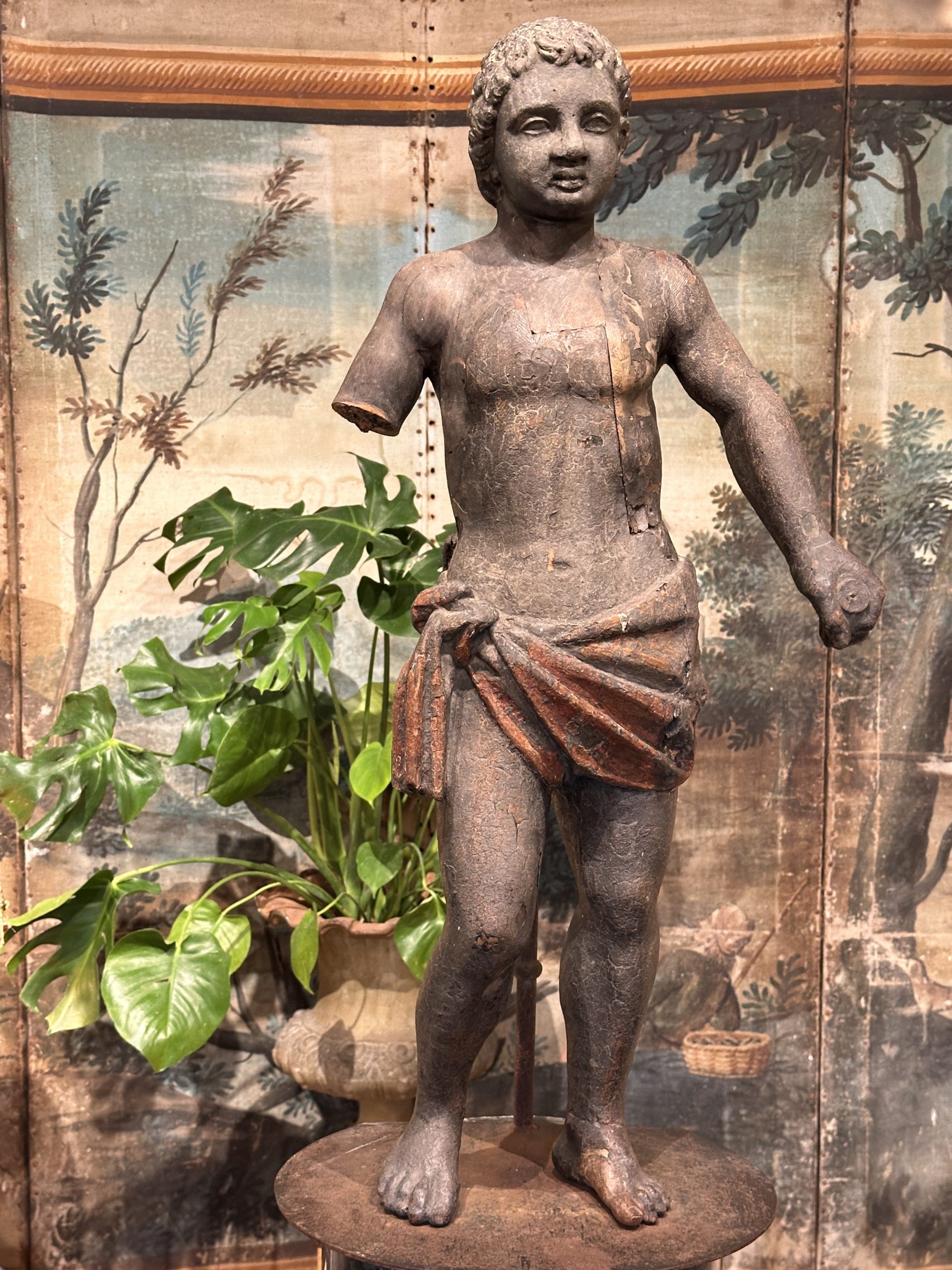
This carved wooden sculpture in the round depicts a male figure whose nudity is partially concealed by a red drapery tied around his waist. The proportions and treatment of the face are consistent with the stereotypical European representation of the “Moor” during the 17th and 18th centuries.
Although the hypothesis of an interior decorative element seems unlikely, the possibility that this sculpture served as a sign appears more plausible.
Several material elements support this assumption. Firstly, the sculpture displays a highly distinctive patina that would have been difficult to develop if it had been kept indoors. Furthermore, the presence on the reverse of a wrought-iron mounting system secured with substantial rivets suggests that the sculpture required a robust means of attachment capable of withstanding exposure to the elements.
In Germany, certain historic pharmacies known as Mohren-Apotheke still feature this type of sculpture on their façades. Historically, during the Renaissance, this designation was considered highly prestigious and complimentary, as it referred to the medicinal expertise of Moorish populations. The name thus conveyed the idea that the pharmacy imported exotic ingredients and medicinal plants from distant lands, considered essential to the preparation of the most effective remedies.

A set of three animal sculptures depicting seated lions/dogs on a rectangular base with chamfered corners. The treatment of the fur is executed using the “filé paste” technique, creating an abundant relief of curling strands. The decoration is characterised by a white glaze, enhanced with touches of blue and green.

A highly realistic terracotta dog, enhanced by its polychromy, glass eyes, collar, and natural pose. The particularly refined modelling delicately captures the animal’s volumes and characteristic features.

Charming polychrome glazed terracotta sculpture depicting a dog seated on an elegant blue cushion adorned with a gilt trim. The sculpture displays a remarkable attention to realism, as evidenced by the finely modelled fur and the particularly lifelike expression of the animal. The flowing treatment of the coat lends the composition a natural sense of movement and vitality. The dog wears a delicate yellow collar, emphasizing its domestic character while adding a subtle touch of colour to this decorative piece.

The smiling faces and finely carved hair are rendered with great care and attention to detail. The sculptures are presented on their respective bases.
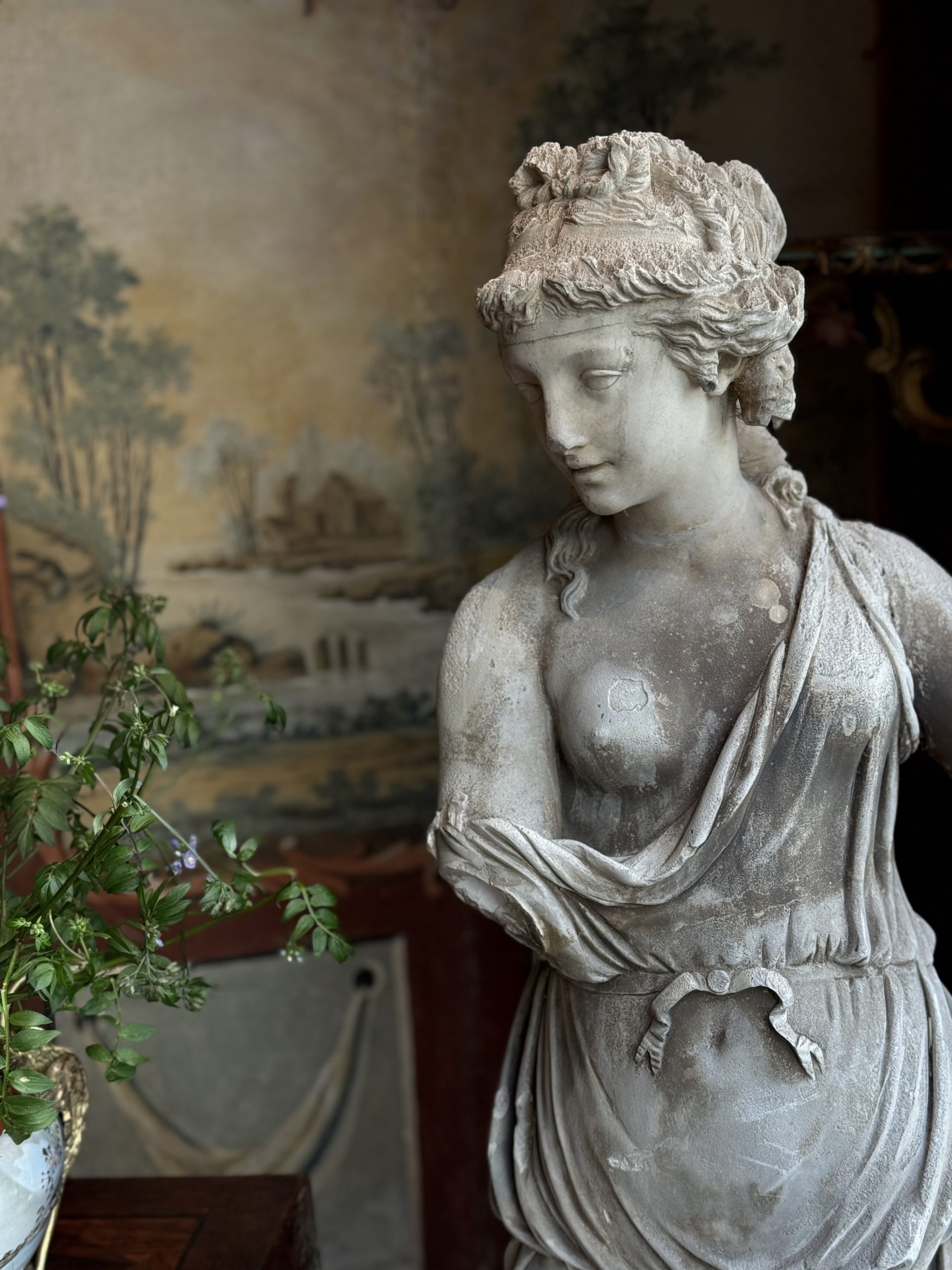
The work is distinguished by its craftsmanship, notably the use of Panneggio Bagnato, or “wet draping.” This technique, attributed to the great Phidias, consists of sculpting the garment as if it had been soaked in water. Venus’s delicate tunic then becomes a second skin: it flows over the body, embracing every curve and revealing its anatomical form with a sensuality of rare elegance. The garment no longer conceals, but magnifies, creating a play of light and shadow between the prominent folds and the softness of the suggested flesh.

Pair of 17th-century theater drapes in carved polychrome wood, depicting an elegant knotted drape adorned with large golden tassels. The skillful carving of the pleated fabric and the richness of the original polychromy give these pieces a particularly theatrical character. Very beautiful preserved antique patina.
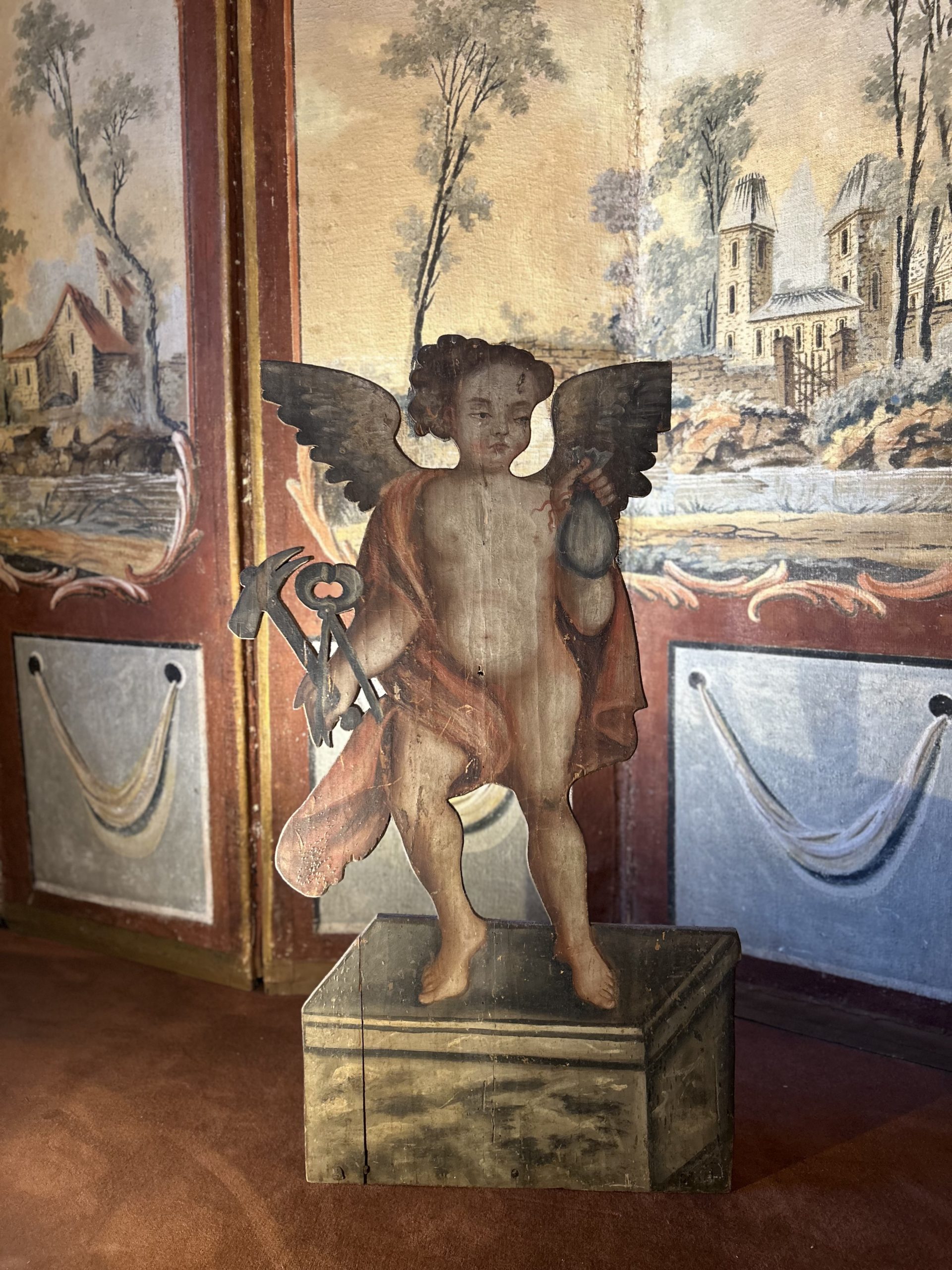
Set of four polychrome woodcut silhouettes representing angels carrying the instruments of the Passion.
Late 18th century
Italy